We deploy dedicated fire crews during wildfires

.svg)
Educational Guide
Fire Suppression Systems: A Complete Guide
Understanding your suppression options is the first step in comprehensive fire protection. Private Fire does not install suppression systems, but we help you understand your risk and defense strategy.

System Types
The Four Major Suppression Systems
Each system type has different applications, costs, and effectiveness against wildfire. Understanding all four helps you build the right layered defense.
.svg)
Residential Sprinkler Systems
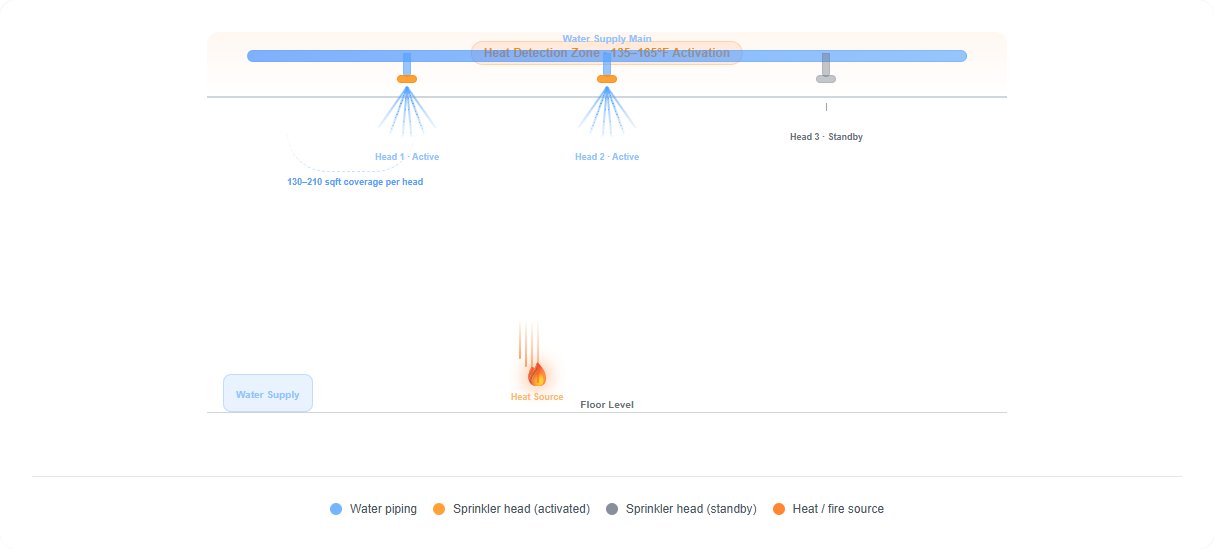
The most widely installed suppression system in residential construction. Sprinkler heads activate automatically when a fusible link or glass bulb within the head reaches 135–165°F — the threshold indicating fire in the immediate area.
How It Works
Each sprinkler head is individually heat-activated. When triggered, water flows through the piping network and is dispersed in a circular pattern covering 130–210 square feet. Modern systems are integrated with the home's domestic plumbing supply, requiring no separate water tank.
.svg)
Advantages
 Automatic activation — no human action required
- Stops most fires before they spread beyond the room of origin
- Can reduce homeowner insurance premiums by 5–15%
- Required by code in all new California residential construction since 2011
.svg)
Advantages
 Requires dedicated water supply and adequate pressure
- Minimal protection against exterior ember intrusion
- Water damage is a secondary concern if activated accidentally
- Not designed specifically for wildfire — better for interior fires
.svg)
Exterior Foam & Suppressant Systems
Class A foam systems coat exterior surfaces with a fire-retardant foam blanket before or during a fire event. These are deployed by professional crews — including Private Fire teams — who apply foam to roofs, walls, decks, and vegetation in advance of a fire front.
How It Works
A foam concentrate is mixed with water at a 0.2–1.0% concentration and discharged through specialized nozzles. The foam adheres to surfaces, insulating them from heat and blocking oxygen. A single application can provide 2–4 hours of protection against radiant heat and ember showers.
Advantages
- Dramatically reduces exterior ignition from embers
- Can be applied pre-emptively before fire arrives
- Effective on all exterior surface types
- Biodegradable — washes away with rain
Limitations
- Must be applied by trained professionals
- Requires specialized equipment and foam concentrate
- Protection is temporary — degrades in heat and wind
- Not suitable as a permanent installed system
.svg)
Water Misting Systems
High-pressure water misting systems generate ultra-fine water droplets (less than 100 microns in diameter) that are dramatically more effective at cooling and suppressing fire than conventional sprinkler systems — while using significantly less water.
How It Works
A high-pressure pump (typically 100–300 bar) forces water through micro-orifice nozzles, creating a dense fog of fine droplets. The large surface area of fine mist allows it to absorb heat 6–10x more efficiently than coarser water sprays. This cools the air, displaces oxygen, and suppresses combustion simultaneously.
Advantages
- 60–70% less water consumption than traditional sprinklers
- More effective at cooling and smoke suppression
- Can cover larger areas with less infrastructure
- Works in areas with limited water supply
Limitations
- Must be applied by trained professionals
- Requires specialized equipment and foam concentrate
- Protection is temporary — degrades in heat and wind
- Not suitable as a permanent installed system
.svg)
Underground & Drip Irrigation Defense
Converting or extending your existing landscaping irrigation system into a fire defense perimeter is the most cost-effective suppression strategy available. A wet zone around your property's perimeter acts as a firebreak and dramatically reduces fuel combustibility.
How It Works
Existing drip or sprinkler irrigation zones are reconfigured to maintain high soil and plant moisture within Zone 1 (0–30ft) around the structure. Pop-up sprinkler heads can be added along the roofline and eaves. Automated controllers tied to weather data ensure the system runs before fire weather events.
Advantages
- Lowest cost of any suppression approach
- Uses existing infrastructure in most cases
- Provides continuous passive protection
- Combines fire defense with landscape maintenance
Limitations
- Not effective during active fire events — water supply can fail
- Requires reliable, pressurized water source
- Must be maintained year-round — not set-and-forget
- Low effectiveness against ember showers on roof and upper structure
Side-by-Side
System Comparison
Compare the four systems across cost, installation, coverage, and wildfire effectiveness.
Criteria
Sprinklers
Foam Systems
Water Misting
Irrigation Defense
Typical Cost
$1.50–$3.50/sqft
$2,000–$8,000/application
$3–$7/sqft
$500–$5,000
DIY Possible
Coverage Area
Interior
Exterior
Interior & Exterior
Perimeter
Maintenance
Annual inspection
Professional application
Quarterly nozzle check
Monthly system check
Wildfire Effectiveness
medium
high
medium
Low

Technical Diagram
Apply to Join the Network
Fill out the form below and our partnerships team will review your application within 5 business days.
Key Considerations
Common Questions
The most important things homeowners ask before deciding on a suppression strategy.
When should I install a suppression system?
Before fire season — ideally in winter or early spring. Installation takes 1–4 weeks depending on system type, and permits must be obtained in advance. Never wait until a fire is threatening your area.
What do suppression systems cost?
Residential sprinklers run $1.50–$3.50 per square foot during new construction, or $2–$7 per square foot for retrofits. Misting systems cost slightly more. Irrigation-based perimeter defense can be implemented for under $5,000 on most properties.
What maintenance do these systems require?
Annual inspections are required for sprinkler and misting systems. Irrigation-based systems need seasonal checks. Foam systems are applied by professionals as needed — they are not permanent installations requiring ongoing maintenance.
Can I combine systems?
Yes — and this is the recommended approach for high-risk properties. A layered strategy combining interior sprinklers, perimeter irrigation defense, and scheduled professional foam application provides the highest level of protection.
.svg)
Important Disclaimer
Private Fire does not install or maintain suppression systems of any kind. We recommend consulting a licensed fire protection engineer for installation guidance. However, our free Risk Assessment can help determine which suppression systems are best suited for your property and risk profile.

Free Service
Ready for a Professional Risk Assessment?
Understanding suppression systems is step one. Step two is knowing exactly what your property needs. Our certified specialists walk your property and deliver a personalized defense plan — completely free.

Private wildfire defense for high-risk homes and properties. Protecting communities, one property at a time.
.svg)
.svg)
.svg)
.svg)
Contact Us


